
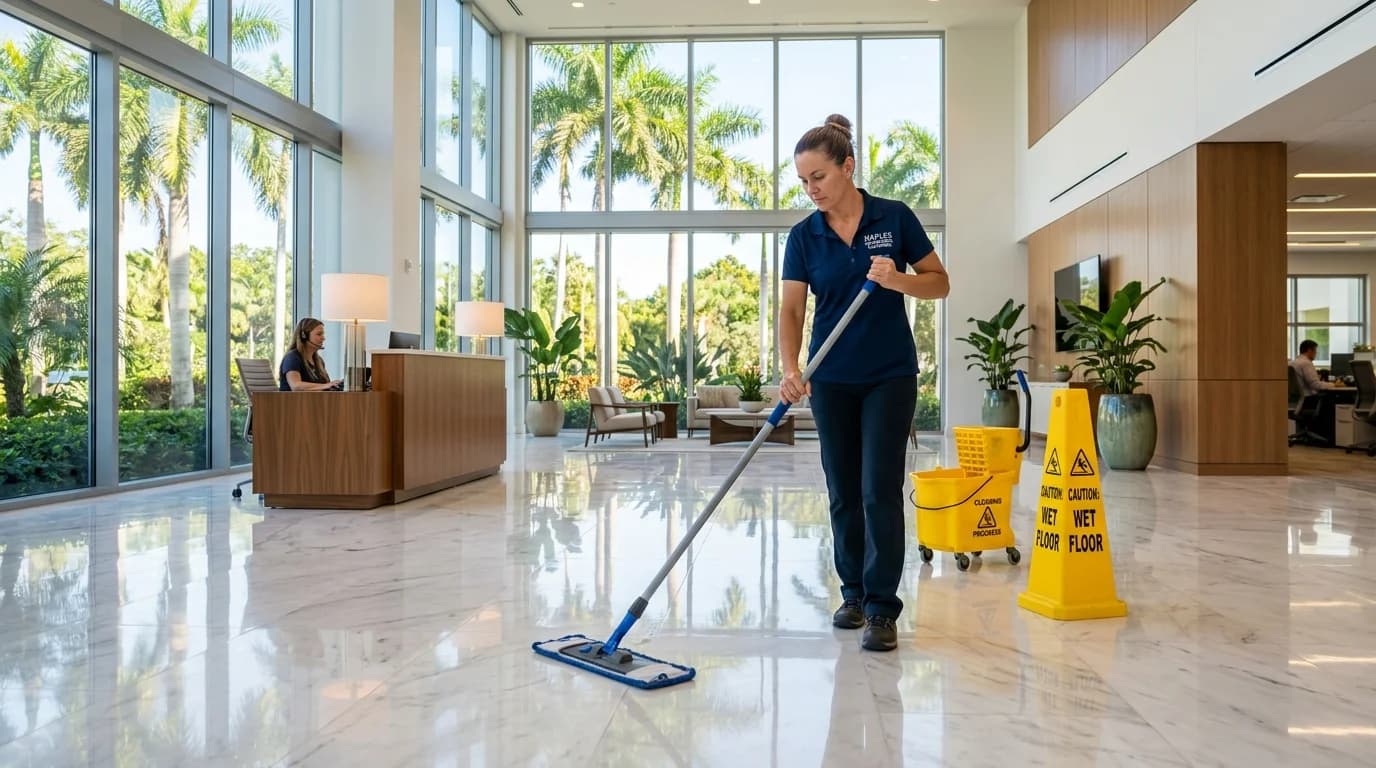
Commercial cleaning services in Naples, FL work best when the plan matches the building, not a generic checklist. The short answer: a good commercial cleaning plan combines a routine schedule for high-traffic areas such as restrooms, entrances, break rooms, and floors with periodic detail work, and it is written down so both sides know what is included. How often, how deep, and when the crew arrives depends on the type of space and how many people use it.
A professional office, a dental practice, a retail shop, a fitness studio, and a church do not share the same priorities. Many Naples businesses also see traffic shift with the winter season, which changes how often entrances, floors, and restrooms need attention.
This guide explains what commercial cleaning includes, how needs differ by facility type, what to know about medical and dental offices, how to compare providers, and how to start a new cleaning arrangement well.
What is commercial cleaning, and how is it different from home cleaning?
Commercial cleaning maintains workplaces and public-facing spaces. Compared with residential cleaning, it usually involves larger areas, more people, set access hours, and shared responsibility, since staff, tenants, and building managers may all be involved. Neat Naples provides commercial cleaning in Naples with plans built around the property and the hours a business operates.
Many commercial jobs happen after hours, which makes keys, alarm codes, and security procedures part of the service. Accountability also looks different. In a home, one person judges the result. In a business, clients, patients, and employees experience the space every day, so a written scope and a simple quality check matter more.
What should a commercial cleaning scope include?
Ask for tasks to be listed by frequency. A typical structure looks like this:
| Frequency | Typical tasks |
|---|---|
| Every visit | Emptying trash and recycling, cleaning and restocking restrooms, vacuuming and mopping floors, wiping desks, counters, and break room surfaces, cleaning entry glass, spot cleaning |
| Weekly | Dusting vents, ledges, and furniture, detailing floor edges and corners, cleaning behind accessible equipment, wiping high-touch surfaces such as door handles, switches, and shared equipment |
| Monthly or quarterly | Baseboards, interior glass and partitions, upholstery, deeper restroom detail, floor machine work |
Specialty services such as carpet extraction, floor stripping and waxing, and exterior window cleaning are often quoted separately. Confirm what is included, because office cleaning can mean very different things from one provider to the next. The same principle applies at home, as explained in the guide to deep cleaning vs regular cleaning in Naples: routine visits maintain, and periodic detail work resets.
How do cleaning needs differ by facility type?
| Facility type | Main priorities | What to clarify |
|---|---|---|
| Professional offices | Restrooms, break rooms, floors, desks, entry glass, trash | Desk-clearing policy, confidential documents, who stocks paper and soap |
| Medical and dental offices | Waiting areas, restrooms, reception, floors, non-clinical surfaces | Which areas are clinical, who handles sharps, regulated waste, and spills, and the practice's own infection-control rules |
| Retail spaces | Floors, entry glass, restrooms, counters, fitting rooms | Cleaning around displays and inventory, timing around opening hours |
| Gyms and fitness studios | Floors, restrooms and locker areas, mirrors, high-touch surfaces | Who wipes equipment during open hours, floor types, restroom frequency |
| Churches and community spaces | Sanctuary and hall floors, restrooms, kitchen and fellowship areas | Event-based scheduling, furniture moving, the role of volunteers |
How often should a commercial space be cleaned?
These are starting points, not rules. A walkthrough should refine them.
Offices with daily staff: several times a week to nightly, with weekly detail work
Medical and dental offices: usually after each clinic day, following the practice's protocols
Retail: daily floors, glass, and restrooms, with periodic deeper floor care
Gyms: daily cleaning, plus staff wipe-downs during open hours
Churches and community spaces: weekly, plus before or after major events
Traffic, restroom count, and flooring all push the schedule up or down. If your business is busier in the winter season, ask the provider how the plan can flex without rewriting the whole agreement.
What should medical and dental offices know before hiring a cleaner?
Medical and dental offices have infection-control rules that a cleaning crew should not improvise around. OSHA's bloodborne pathogens standard requires employers whose employees have occupational exposure to keep a written exposure control plan, train those employees at assignment and at least annually, and make hepatitis B vaccination available. The standard also calls for a written cleaning schedule, appropriate decontamination of surfaces contaminated with blood or other potentially infectious materials, and specific handling for sharps containers and regulated waste.
In practice, this means scope matters. Routine contract cleaning commonly covers non-clinical areas such as waiting rooms, restrooms, reception, offices, and floors. Clinical decontamination, sharps, and regulated waste are generally left to the practice's own trained staff unless a provider is specifically trained and equipped for that work. Put the details in writing:
Which rooms the crew cleans and which they do not enter
Which products the practice requires or prohibits
Who responds to a spill of blood or body fluid
How incidents are reported and documented
Neat Naples can discuss cleaning scope for medical and dental facilities, with clinical infection-control steps staying with the practice's clinical team. This is general information, not legal or compliance advice, so check requirements with your compliance lead.
What should you know about products, safety, and disinfecting?
Three checks help any business owner.
Safety data sheets: OSHA's Hazard Communication Standard requires employers with hazardous chemicals in the workplace to have labels and safety data sheets for exposed workers and to train them to handle the chemicals appropriately. A professional crew should be able to say what products it uses and where the data sheets are kept.
Product choice: Some businesses prefer products carrying the EPA's Safer Choice label, a voluntary program that helps buyers find products with ingredients that are safer for human health and the environment. If you have preferences, such as fragrance-free or safer-ingredient products, say so before the first visit.
Disinfecting: Cleaning and disinfecting are different jobs. The EPA explains that cleaning removes dirt and organic matter, while sanitizing and disinfecting rely on registered chemical products used according to label directions. Decide which surfaces need disinfection, such as restroom fixtures and shared touch points, and which only need regular cleaning.
How do after-hours access and security work?
Many commercial cleanings happen outside business hours, so agree on the basics in writing before the first visit:
Who holds keys, codes, or fobs, and how they are returned
Arrival and departure times
How the alarm is armed and disarmed
Areas that stay locked, including cash areas and records rooms
How confidential papers on desks are handled
Who is notified if something is damaged, missing, or unsafe
Keep a simple key and code log, and change codes when staff changes. Ask whether crew members are screened and supervised. For more on credentials, see the guide to licensed, bonded, and insured cleaning companies in Naples.
Patricia's Standard for Naples Residences
“In Southwest Florida's climate, routine cleaning requires more than surface dust removal. Between coastal humidity, salt air, and delicate surfaces like marble and travertine, our room-by-room checklist ensures every detail is handled with surface-safe techniques and uncompromising care.”
— Patricia Gilroy, Owner & Operator
What affects the cost of commercial cleaning?
There is no single price. Providers usually build quotes from these factors:
Square footage and layout
Number of restrooms
Floor types and floor care needs
Cleaning frequency
Facility type and the standard you expect
After-hours scheduling
Who supplies paper, soap, and liners
Specialty services
A trustworthy quote follows a walkthrough. Be careful with prices given by phone without seeing the space, and with quotes far below the others. A very low price often reflects a thinner scope or less labor time on site.
How do you compare commercial cleaning providers?
Use the same checklist for every provider so quotes are comparable:
A written scope with tasks listed by frequency
A walkthrough before the quote
Proof of insurance and a clear answer on licensing and bonding
A staffing plan: who cleans, who supervises, who covers absences
A quality routine: how inspections work and how issues are fixed
One point of contact and a stated response time
Contract terms: length, cancellation notice, trial period, and price changes
References from similar facilities
Providers who answer these questions clearly and in writing are usually easier to work with over time.
How should a new cleaning arrangement start?
The first month sets the pattern.
Walk the space together with the written scope in hand.
Sign off on the scope, including exclusions.
Start with a short trial period or a 30-day review.
Inspect after the first week and note anything missed.
Adjust the scope, adding or removing tasks based on what you see.
Set a regular check-in and keep one shared log of requests.
Small adjustments in the first month prevent bigger frustrations later.
What are the warning signs of a weak commercial cleaning offer?
A vague scope such as we clean everything
No walkthrough before pricing
Hesitation to share insurance information
Pressure to sign a long contract before a trial
No plan for absences or missed visits
Product names or safety information that nobody can explain
Frequently asked questions about commercial cleaning in Naples
What does commercial cleaning include?
Commercial cleaning typically includes trash removal, restroom cleaning and restocking, floor care, surface wiping, and entry glass every visit, plus weekly and monthly detail tasks. Specialty work such as carpet extraction or floor waxing is often priced separately, so confirm the scope in writing.
How much does commercial cleaning cost in Naples?
There is no single price. Quotes depend on square footage, restroom count, floor types, frequency, facility type, and after-hours scheduling. A reliable quote follows an on-site walkthrough, and a written scope makes it easy to compare providers fairly.
How often should an office be cleaned?
Offices with daily staff are often cleaned several times a week to nightly, with weekly detail work. Smaller or lightly used offices may need less. A walkthrough and a short trial period help set the right frequency.
Do cleaners need special training for medical or dental offices?
Medical and dental offices follow infection-control rules, including OSHA's bloodborne pathogens standard where employees have occupational exposure. Routine cleaning usually covers non-clinical areas, while sharps and regulated waste stay with the practice's trained staff unless a provider is specifically equipped for that work. Define the scope in writing.
Can commercial cleaning happen after hours?
Yes. Many Naples businesses schedule cleaning after closing so staff and customers are not disrupted. After-hours work requires clear agreements on keys, alarm codes, arrival times, and who to contact if something goes wrong.
Professional Care in Naples
Looking for Commercial Cleaning?
Explore our tailored service plan, room-by-room checklist, and transparent Naples pricing.
Request a commercial cleaning estimate in Naples
Neat Naples provides commercial cleaning for professional offices, medical and dental facilities, retail spaces, gyms and fitness studios, and churches and community spaces across Naples, Marco Island, and nearby Southwest Florida communities. Share the type of space, its size, your operating hours, and how often you want service, and Neat Naples can recommend a plan. Request a commercial cleaning estimate to get started.